This guide is for first-time visitors or online shoppers standing in front of an Olive Young shelf, or a dermatology clinic’s gift-shop wall, trying to figure out why one jar says nothing special and another screams “dermocosmetic” at triple the price.
I’ve stood in that exact aisle confusion myself, assuming the box with the most clinical-looking font had to be the stronger product. It usually wasn’t.
By the end of this article you’ll know what the label actually means, which of the two fits your skin type, the order to layer them in, and where in Korea each one is actually sold.
What does “medical grade” actually mean for Korean skincare?
In Korea, “medical grade” is a marketing phrase, not an official product tier.
Every cosmetic sold in Korea, from a 1,000 won sheet mask to a 70,000 won ampoule from a clinic-affiliated brand, is regulated by the same authority, Korea’s Ministry of Food and Drug Safety (MFDS), mainly for safety and labeling rather than medical claims.
The closest thing to an official stricter tier is 기능성화장품, or “functional cosmetics” — a category covering whitening, anti-wrinkle, and UV-protection products that must submit efficacy data to the MFDS before launch.
Even that category isn’t printed as “medical grade” on the box.
What actually separates the two groups is pedigree, not regulation. CNP Laboratory began as aftercare products developed for patients of CNP Skin Clinic. AESTURA, owned by Amorepacific, traces back to a pharmaceutical business the company founded in 1982. Dr.G markets itself as a medical-aesthetics brand meant for use around in-office procedures.
That clinical origin story is the real difference — not a government stamp that regular Korean skincare lacks.
Korean skincare vs medical grade: what’s really different?
The split comes down to who formulated it and what problem it was built to solve, not a hard legal line.
| Category | Everyday Korean skincare | Medical-grade / dermocosmetic |
|---|---|---|
| Developed by | Beauty brands, R&D labs | Clinics, dermatologists, pharma-linked companies |
| Main goal | Hydration, barrier balance, glow | Targeted repair: redness, post-procedure, barrier damage |
| Texture/scent | Often fragranced, layered rituals | Usually fragrance-free, minimal ingredient lists |
| Typical price (per item) | Roughly $10–25 | Roughly $25–60, clinic-exclusive lines higher |
When I compared ingredient panels side by side at a pharmacy counter, the dermocosmetic lines genuinely had shorter lists — often under 20 ingredients — while a popular Korean essence nearby listed closer to 40.
Fewer ingredients isn’t automatically “stronger,” but it does tend to mean fewer potential irritants, which matters more for reactive skin than for normal skin.
Which category fits your skin type?
Sensitive and post-procedure skin generally does better with dermocosmetic lines; normal-to-dry skin does fine with everyday Korean skincare.
| Skin type | Lean toward | Watch out for |
|---|---|---|
| Sensitive, reactive, rosacea-prone | Dermocosmetic (AESTURA, Dr.G, CNP) | Added fragrance, alcohol-heavy toners |
| Acne-prone, oily | Mix of both, lightweight gel textures | Heavy oils, over-exfoliating |
| Dry, dehydrated | Everyday Korean skincare (ampoules, essences) | Skipping moisturizer after a watery toner |
| Mature, concerned about texture | PDRN-based or clinic-origin lines (e.g. REJURAN) | Assuming one ampoule replaces sunscreen |
If you’ve just had a laser or peel treatment at a Korean clinic, staff will usually point you toward the clinic’s own aftercare line rather than a general Olive Young pick — that’s worth asking about directly during your visit.
What’s the right order to layer Korean skincare and medical-grade products?
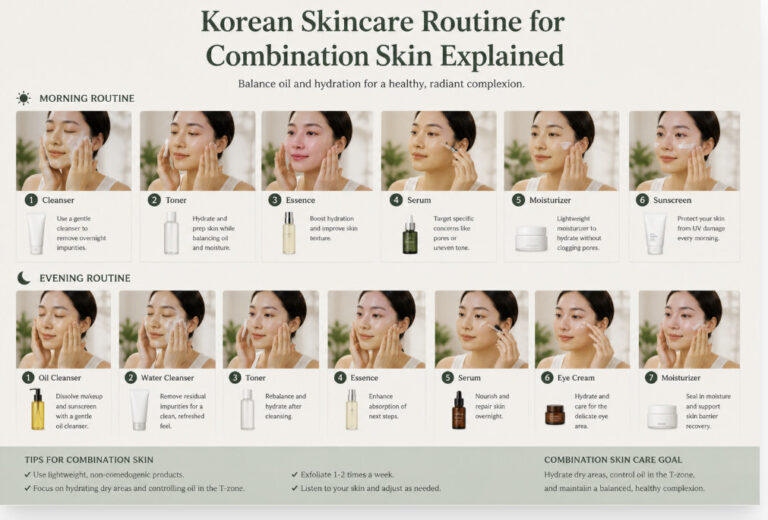
The order stays the same regardless of category: thinnest texture first, heaviest and most protective last.
The one mistake I see most often is putting a dermocosmetic barrier cream (step 4) before a water-based ampoule — it blocks absorption instead of helping it. Keep the rule simple: water-based first, oil- or cream-based last, and sunscreen always comes after everything else in the morning.
Where can you actually buy these in Korea?
Everyday Korean skincare is sold almost everywhere; dermocosmetic and clinic-exclusive lines are sold in fewer, specific places.
| Where | What you’ll find |
|---|---|
| Olive Young (stores + Olive Young Global app) | Both categories side by side — CNP, AESTURA, Dr.G, plus everyday brands like Anua and MEDIPEEL |
| Pharmacies (약국) | Dermocosmetic lines historically distributed through pharmacy channels |
| Dermatology clinics (Gangnam, Apgujeong areas) | In-clinic exclusive post-procedure lines, not sold publicly |
| Department store beauty halls, duty-free | Premium Korean skincare lines, gift sets |
When I asked a pharmacist near a Seoul clinic why a CNP ampoule cost more than a similar-looking Olive Young product, the answer was simple: formulation and testing cost, not a stronger legal grade.
Worth checking the ingredient panel yourself rather than trusting packaging alone.
For layering basics before you shop, our Korean toner vs essence guide and glass skin routine guide cover the everyday side of this comparison in more depth, and the K-beauty and K-fashion 2026 overview is useful if you’re new to the broader category.
Frequently asked questions about Korean skincare vs medical grade
Is “medical grade” an official Korean cosmetics category?
No. Korea’s MFDS regulates all cosmetics under one safety and labeling framework; “medical grade” is a brand marketing term, not a legal tier.
Do I need a prescription to buy dermocosmetic Korean skincare?
No, brands like AESTURA, CNP, and Dr.G are sold over the counter at Olive Young and pharmacies. Only some clinic-exclusive aftercare lines are limited to in-clinic sales.
What’s the biggest mistake first-time buyers make?
Assuming the most clinical-looking packaging or the highest price means stronger results. Check the ingredient list and skip anything that lists multiple fragrances if your skin is reactive.
Can I mix everyday Korean skincare with medical-grade products?
Yes, many routines combine both — an everyday essence for hydration, then a dermocosmetic cream for barrier repair, layered thinnest to thickest.
So, have you tried a Korean dermocosmetic brand yet, or are you still sticking with the everyday aisle? Let us know in the comments which one actually worked for your skin.
Source: Editlab, https://editlab.luvpp.com
EDITLABPublished by EditlabA media network of 8 titles with free data tools.About the network ›
Written by the Editlab editorial desk · Automated pre-publication checks (duplicates, format, house rules) · Report an error · Add this site as a preferred source on Google
검색해도 내 집 사정과는 다를 때가 있습니다. 같은 것을 찾아본 사람들이 모여 있는 곳이 있습니다. 글은 누구나 읽을 수 있고, 질문을 남기려면 카페 가입이 필요합니다.