2026 K-Beauty Guide
Korean Skincare Routine for Combination Skin, 2026 Korean Skin Barrier Balance, Start This Smarter 7-Step Method Now
Combination skin is a bit like having two roommates in one face: the T-zone wants less shine, while the cheeks often ask for more comfort. The good news is that a Korean skincare routine does not need to be long or complicated in 2026. The real goal is balance, not endless layering. This guide explains each step in clear English, shows how to choose ingredients without overdoing it, and helps you build a routine that feels gentle, modern, and realistic.
Combination skin usually means your forehead, nose, and chin produce more oil, while the cheeks or jawline can feel normal, tight, or even flaky. That is why one harsh cleanser for the whole face often causes drama: the oily area gets briefly squeaky, and the drier area starts sending complaint letters. In 2026, the Korean approach leans toward skin-barrier care, lighter layers, and targeted treatment rather than a rigid 10-step ritual for everyone.
The simplest way to think about it is this: oily zones need control without stripping, and drier zones need water and comfort without heavy buildup. So instead of asking, “How many products do I need?” ask, “What does each area need today?” That small change makes routines easier, cheaper, and much more effective over time.
Rule of thumb: keep the base routine gentle, then adjust the amount of toner, serum, or cream depending on the zone of the face.
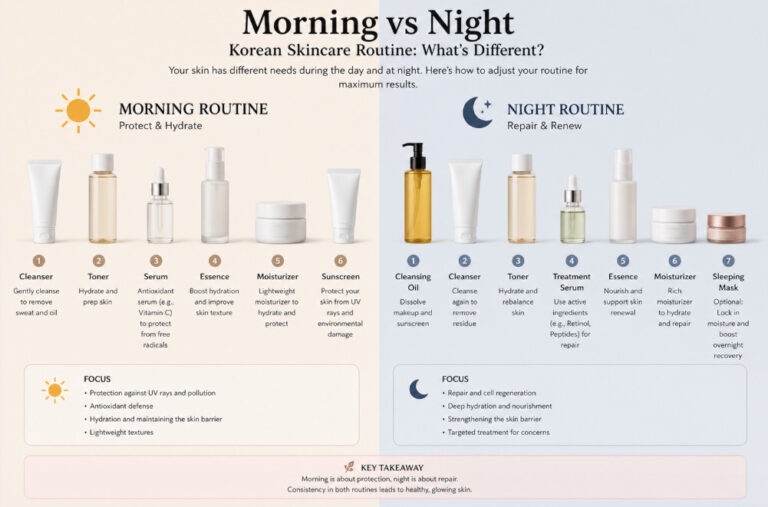
1. Cleanse lightly
In the morning, many people with combination skin do best with a gentle gel cleanser or even a water rinse if the skin is not very oily. The point is to remove overnight sweat and sebum without making the cheeks feel tight before the day has even started.
2. Use a hydrating toner
Choose a toner that adds water, not sting. A smart trick is to use one thin layer on the T-zone and an extra layer on the cheeks if they get dry. This keeps the face balanced instead of equally overloaded.
3. Apply a balancing serum
Niacinamide is a popular option because it can help with visible oiliness, uneven tone, and general skin calmness. If your skin gets red easily, soothing formulas with centella, heartleaf, or beta-glucan can make the routine feel kinder.
4. Moisturize by texture
Use a light gel-cream on the whole face or apply a slightly richer cream only on the drier areas. You do not need to cover your oily zones in a blanket of cream if they only need a light jacket.
5. Finish with sunscreen
Daily sunscreen matters more than most trendy extras. For combination skin, fluid or lightweight cream textures are often easiest to wear because they protect without turning the face into a shiny mirror by lunchtime.
1. Double cleanse when needed
If you wore sunscreen or makeup, start with an oil or balm cleanser, then follow with a gentle water-based cleanser. This classic Korean method helps remove sebum, SPF, and dirt more thoroughly than rubbing the face harder and hoping for the best.
2. Exfoliate carefully
You do not need daily exfoliation. One to three times a week is usually enough, depending on the product and how sensitive your skin is. Focus on clogged areas, and stop if the skin starts feeling hot, shiny, or irritated in a bad way.
3. Layer hydration first
After cleansing, apply toner or essence while the skin still feels slightly damp. This helps the drier parts of the face stay comfortable and can reduce the temptation to overuse thick creams later.
4. Add one treatment product
At night, keep it focused. If you want help with dullness, texture, or post-acne marks, pick one main treatment and give it time to work. Using too many strong actives at once often creates irritation, not progress.
5. Seal with a barrier-friendly cream
A good evening moisturizer should make the cheeks feel soft by morning without leaving the T-zone greasy. Lightweight ceramide creams, cica creams, or lotion-gel textures are often a sweet spot for combination skin.
Skincare trends in 2026 are moving toward barrier support, strategic hydration, and less aggressive routines. That is especially helpful for combination skin, because this skin type usually gets worse when people swing between strong oil control and panic moisturizing.
| Ingredient | Why people use it | Good fit for combination skin |
|---|---|---|
| Niacinamide | Helps with visible oiliness, tone, and overall balance | Useful when the T-zone gets shiny but the whole face still needs a calm routine |
| Beta-glucan | Supports hydration and the skin barrier | Great when skin feels dehydrated but heavy creams feel too much |
| Heartleaf / centella | Soothes redness and stressed skin | Helpful for skin that gets moody after weather, travel, or over-cleansing |
| Ceramides | Reinforce the barrier and reduce tightness | Best for cheeks or jaw areas that feel dry even when the nose stays oily |
| Rice extract / ferments | Support smooth texture and soft glow | Nice for dull combination skin when used in gentle formulas |
| Tranexamic acid or peptides | Target tone concerns and resilience | Useful as optional treatment steps, not mandatory for beginners |
A calm routine usually beats an ambitious one. Skin loves consistency more than drama.
- Using a strong foaming cleanser twice a day and calling the tight feeling “clean.” That is often the first step toward irritation.
- Applying thick products everywhere because one area feels dry. Combination skin often needs placement, not blanket coverage.
- Trying too many trend ingredients at once. Even good ingredients become troublemakers when stacked carelessly.
- Skipping sunscreen while spending money on brightening products. That is like mopping the floor while the window is still open in the rain.
- Exfoliating whenever pores look visible. Pores are not villains; they are normal. Angry skin is not a beauty shortcut.
Once or twice a week, a clay mask only on the T-zone can help with excess oil, while a hydrating sheet mask or sleeping pack can comfort drier areas. You do not have to treat the whole face as one climate zone. It can be a little desert on one side and a tiny summer festival on the forehead.
In humid months, switch to lighter lotions and use fewer layers. In colder or windy weather, keep the same basic order but increase barrier-supporting products such as ceramide creams, soothing essences, or richer moisturizer only where needed.
FAQs
Do I need all 10 steps?
No. Many people with combination skin do very well with 4 to 7 steps. Korean skincare is more about thoughtful layering than chasing a magic number.
Should oily areas get less moisturizer?
Usually yes, but not zero. Oily skin can still be dehydrated. A lighter texture on the T-zone and a richer one on dry areas often works well.
How long before I see results?
Simple hydration changes can feel better within days, but improvements in texture, tone, or breakouts often need several weeks of steady use.
A good Korean skincare routine for combination skin in 2026 is not about using the most products. It is about reading your skin honestly, choosing softer formulas, and adjusting by zone instead of forcing one answer onto the whole face. When the routine feels calm, the skin often follows.