If you are new to Korean beauty and just typed something like korean skincare best products into Google, you are probably standing in front of a wall of Hangul labels, either online or in a store, with no idea where to start.
This guide is written for exactly that first-time shopper, not for people who already know their serums from their ampoules.
I remember stepping into an Olive Young flagship store in Seoul’s Myeongdong district for the first time and freezing in front of a single cleanser aisle for a good fifteen minutes.
A staff member finally walked over and asked what my skin felt like that day, not which brand I wanted, and that question is really the whole point of this article.
Below you will find how to choose Korean skincare best products by skin type, which ingredients actually matter, the order you apply them in, where to buy them safely, and the mistakes almost every beginner makes.
How Do You Choose Korean Skincare Best Products for Your Skin Type?
The fastest way to pick Korean skincare best products is to match the texture and main active ingredient to your skin type, not the brand name on the bottle.
Korean beauty counters are built around this logic more than Western drugstores are, which is why Olive Young and similar stores group shelves by concern rather than by brand. Here is the breakdown I actually use when a friend asks me to shop for them.
| Skin Type | Look For | Avoid |
|---|---|---|
| Oily or acne-prone | Gel textures, salicylic acid (BHA), niacinamide, tea tree or centella | Heavy oils, thick overnight creams |
| Dry | Ceramide creams, snail mucin, hyaluronic acid, sleeping masks | High-alcohol toners, foaming cleansers that strip |
| Combination | Lightweight essence plus a richer cream only on dry patches | One-size-fits-all heavy moisturizer across the whole face |
| Sensitive or reactive | Fragrance-free lines, centella (cica), panthenol, propolis | Multiple new actives at once, strong acids |
| Dull or aging concerns | PDRN (often listed as salmon DNA), peptides, vitamin C | Skipping sunscreen while using brightening actives |
If my Korean skincare routine has taught me one thing, it is that the right routine for acne-prone skin looks almost nothing like the one that works for a dry, flaky winter face, even if both routines are sold in the same aisle.
Which Ingredients Should You Actually Look for in Korean Skincare?
Ingredient names on Korean packaging can look intimidating, but a handful of them cover most of what you need to understand before buying.
| Ingredient | Main Benefit | Best For | Caution |
|---|---|---|---|
| Centella Asiatica (Cica) | Calms redness and irritation | Sensitive, reactive skin | Generally low risk |
| Snail mucin | Hydration and surface repair | Dry, dehydrated skin | Texture can feel sticky |
| Niacinamide | Oil control, brightening | Oily, combination, acne-prone | Can sting if mixed with strong acids |
| PDRN | Plumping, skin recovery | Dull, aging-concern skin | Usually priced higher, patch test first |
| Propolis | Soothing, mild antibacterial | Acne-prone, sensitive skin | Skip if allergic to bee products |
| Ceramides | Rebuilds the skin barrier | Dry or barrier-damaged skin | Generally low risk |
None of these ingredients work overnight, and no serum will clear skin in three days no matter what a product description promises. Think of this as information to shop smarter, not a medical claim.
What Order Should You Apply Korean Skincare Products In?
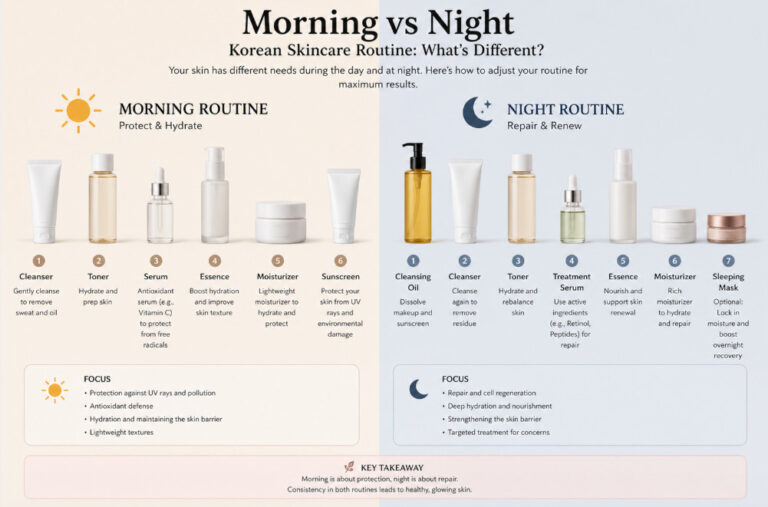
The short version: cleanse, tone, treat, moisturize, protect, and apply the thinnest, most watery products before the thickest ones.
Sheet masks and exfoliants are optional extras you slot in two to three times a week, usually right after cleansing or right before the serum step, not every single day.
Where Can You Buy Korean Skincare Best Products?
You do not need to travel to Korea to buy authentic products, though shopping in person gives you access to testers and staff advice that online listings cannot replace.
| Where | Good For | Note |
|---|---|---|
| Olive Young Global (official site) | Authentic stock shipped internationally | Shipping speed and free-shipping thresholds vary by country, so check current rates before ordering |
| Olive Young stores (Myeongdong, Hongdae, Gangnam) | Testing textures and scents in person | Flagship branches are multi-floor and can be overwhelming on a first visit |
| YesStyle | Wide catalog, frequent sales | Ships internationally, delivery times vary by region |
| Soko Glam | Beginners who want a curated list | Smaller selection but easier to navigate with English support |
| Marketplace storefronts (Amazon and similar) | Fast local shipping | Confirm the seller is an authorized retailer to avoid counterfeits |
On a later trip, I ordered through Olive Young Global instead of hauling bottles home in my suitcase, and tracking took close to a week to clear customs, which roughly matched what the shipping page had already warned me about. Build in that buffer if you are ordering before a trip.
What Mistakes Do Beginners Make With Korean Skincare?
Most first-time K-beauty shoppers run into the same handful of problems, and almost all of them are avoidable.
- Layering too many actives at once: I once put a vitamin C serum under a niacinamide essence on the same night and my skin turned red and patchy within two days.
- Skipping the patch test: apply a new product to your inner arm for a day or two before putting it on your face.
- Judging results too fast: most actives need four to six weeks of steady use before you see a real change.
- Buying on packaging alone: cute branding does not tell you whether an ingredient suits your skin type.
- Forgetting sunscreen: brightening ingredients like niacinamide and vitamin C make skin more visible to sun damage, not less.
For more on how this fits into the wider K-beauty trends shaping 2026, or how skincare connects to the broader K-beauty and K-fashion lifestyle abroad, the routines above are the foundation everything else builds on.
Frequently Asked Questions
What are the best Korean skincare products for beginners?
A gentle cleanser, a centella or ceramide moisturizer, and a basic sunscreen are the safest starting point before adding targeted serums.
Do I need all ten steps of a Korean skincare routine?
No, most dermatology-minded users stick to four or five core steps daily and save masks or extra treatments for two to three times a week.
Is it safe to buy Korean skincare online from outside Korea?
Yes, as long as you order from the brand’s official storefront or a known retailer like Olive Young Global, YesStyle, or Soko Glam rather than an unverified reseller.
How long before Korean skincare products show results?
Most active ingredients need roughly four to six weeks of consistent use, so avoid switching products too quickly based on short-term impressions.
For general information on cosmetic ingredient safety, the U.S. FDA’s cosmetics safety guidance is a useful independent reference when comparing claims across any country’s products.
Picking Korean skincare best products really comes down to matching texture and active ingredients to your own skin rather than chasing whatever is trending. Start small, patch test, and build your routine one step at a time. What skin concern are you shopping to solve first, let us know in the comments.
Source: Editlab, https://editlab.luvpp.com
EDITLABPublished by EditlabA media network of 8 titles with free data tools.About the network ›
Written by the Editlab editorial desk · Automated pre-publication checks (duplicates, format, house rules) · Report an error · Add this site as a preferred source on Google
별것 아닌데 물어볼 데가 마땅치 않습니다. 궁금한 대목만 따로 여쭤보셔도 괜찮습니다. 글은 누구나 읽을 수 있고, 질문을 남기려면 카페 가입이 필요합니다.