You spot a Korean skincare ad with impossibly smooth, light-catching skin, then check your own face under bathroom light and wonder why your glow looks more like grease instead.
That mix-up is common enough that first-time K-beauty shoppers keep asking the same question at Seoul beauty counters and in online skincare forums: is this glass skin, or is it just shiny skin.
This guide is written for anyone new to Korean beauty who wants a clear answer: the 3 signs that separate the two, which ingredients fit your actual skin type, the order to apply products in, and where to buy them.
What Is Glass Skin, And How Is It Different From Shiny Skin?
Glass skin is smooth, hydrated skin that reflects light evenly, while shiny skin is oil sitting on top of a rougher surface.
The glass part of the name describes how light bounces off skin, not how wet or glossy it looks. Well hydrated, smooth skin scatters light evenly, so it reads as a soft glow instead of one bright spot.
Shiny skin usually shows up as a hot spot of oil across the forehead, nose, and chin while the rest of the face looks duller by comparison.
By early 2026, some K-beauty brands started using softer terms like cloudglow or bloom skin to describe a more diffused, less mirror-like version of this glow, a shift covered in this K-Beauty 2026 skincare trends roundup. The core idea has not changed much: hydration and skin quality first, shine second.
For background on how this aesthetic became a global trend, see the K-beauty overview from Wikipedia.
Glass Skin Vs Shiny Skin: 3 Signs You Can Check Today
You can tell glass skin from shiny skin with three quick checks: texture, where the shine sits, and how skin feels by midday.
Look closely in natural light, then touch your cheek and T-zone separately. The table below lists what each sign looks like for glass skin compared with shiny skin.
| Sign | Glass Skin | Shiny Skin |
|---|---|---|
| Texture | Smooth, no visible bumps | Congested or bumpy under the shine |
| Where shine sits | Even across the whole face | Mostly T-zone, patchy elsewhere |
| Midday feel | Comfortable, not tacky | Heavy, tacky, makeup slides off |
If your skin matches the middle column on at least two of these three signs, your routine is working. If it matches the right column, the fix is usually about products and order, not about using less moisturizer.
Which Skin Type Am I, And What Ingredients Should I Look For?
Your skin type decides which ingredients help you reach glass skin instead of sliding into shiny skin.
Korean skincare is built around layering lightweight products, but lightweight means something different for dry skin than for oily skin. Picking the right Korean beauty brand starts with matching its star ingredient to your skin type, not its packaging or how popular it is online.
| Skin Type | Look For | Use With Caution |
|---|---|---|
| Dry | Ceramides, hyaluronic acid, squalane | High-alcohol toners, strong acids |
| Oily / acne-prone | Niacinamide, centella (cica), BHA | Heavy balms as the last step |
| Combination | Lightweight essence, gel moisturizer | One rich cream for the whole face |
| Sensitive | Centella, panthenol, fragrance-free | High-percentage acids, added fragrance |
Oily skin can still get a glass-skin look. The trick is hydrating with lighter textures, such as essences and gel creams, instead of skipping moisturizer, which usually backfires into more oil, not less.
What Order Do I Apply Korean Skincare Products In?
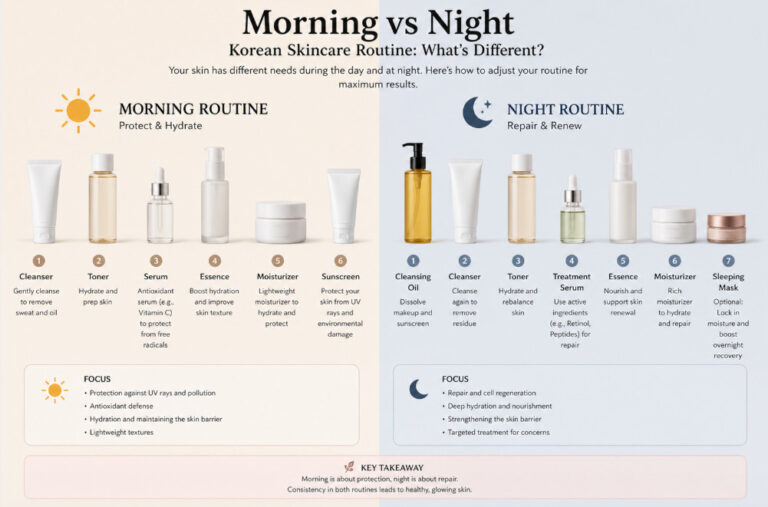
Apply products from thinnest to thickest: cleanser, toner, essence or serum, moisturizer, then sunscreen in the morning.
You do not need all 10 steps of the classic K-beauty routine to notice a change. Most people see a difference with just 5 steps: cleanser, toner, one targeted serum, moisturizer, and sunscreen.
| Step | Morning | Evening |
|---|---|---|
| 1. Cleanse | Light, water-based cleanser | Oil cleanser first, then water-based |
| 2. Toner | Hydrating toner | Same toner |
| 3. Treatment | Light serum | Serum or sleeping pack |
| 4. Moisturizer | Lightweight lotion or gel cream | Richer cream if skin feels dry |
| 5. Sun care | Sunscreen, reapplied midday | Not needed |
Sunscreen is the step most people shorten, and it is also the step most likely to turn glass skin into dull or shiny-looking skin by afternoon.
Formulas differ by region too: Korean sunscreen compared with Australian sunscreen by skin type explains why a sunscreen that feels light in Korea can still feel heavy in a different climate.
Where Can I Buy These Korean Skincare Products?
Most shoppers buy Korean skincare at Olive Young stores in Korea, or online through Olive Young Global, YesStyle, or Amazon outside Korea.
Olive Young is the largest K-beauty retail chain in Korea, with branches in every major shopping area, including Myeongdong and Hongdae in Seoul, where staff are used to helping first-time visitors compare products by skin type.
| Where | Best For | Rough Price Range |
|---|---|---|
| Olive Young (in-store, Korea) | Full range, testers, staff advice | About $7 to $25 per item |
| Olive Young Global / YesStyle | Shipping outside Korea | Similar price plus shipping |
| Amazon | Convenience, familiar checkout | Often marked up |
| Department store beauty halls | Premium lines | $30 and up |
Prices shift by brand, promotion, and season, so treat these as rough ranges rather than fixed numbers, and check the retailer’s own listing before buying.
What Mistakes Turn Glass Skin Into Shiny Skin?
The fastest way to turn glass skin into shiny skin is skipping moisturizer after an oil-control product, which pushes skin to produce even more oil.
- Over-exfoliating with acids more than 2 to 3 times a week, which strips skin and triggers extra oil.
- Skipping sunscreen reapplication, so skin oxidizes and looks dull or patchy by afternoon instead of glowing.
- Using blotting papers or powder as the main fix instead of addressing dehydration underneath the oil.
- Layering too many heavy products at once, which can suffocate skin rather than hydrate it.
Frequently Asked Questions
Is glass skin the same as glowing skin?
Not exactly. Glowing skin is a general term, while glass skin specifically describes smooth, hydrated skin that reflects light evenly across the whole face.
Can oily skin get glass skin too?
Yes. Oily skin can reach a glass-skin look by using lightweight hydrating products instead of skipping moisturizer, which usually makes oiliness worse.
What is cloudglow or bloom skin, and is it different from glass skin?
Cloudglow and bloom skin are newer, softer versions of the same idea, describing a more diffused glow instead of a high-shine, mirror-like finish.
Do I need all 10 steps to get glass skin?
No. Most people notice a difference with around 5 steps: cleanser, toner, one treatment serum, moisturizer, and sunscreen, applied consistently.
Glass skin comes down to hydration and the right order, not a longer shopping list. If your skin matches more of the shiny-skin column above, start with the routine order and skin-type table before buying anything new.
Does your skin look more glass or more shine by midday? Tell us in the comments, and we will keep covering how K-beauty trends like cloudglow skin actually hold up in daily use.
Editlab, https://editlab.luvpp.com
EDITLABPublished by EditlabA media network of 8 titles with free data tools.About the network ›
Written by the Editlab editorial desk · Automated pre-publication checks (duplicates, format, house rules) · Report an error · Add this site as a preferred source on Google
해 보기 전에는 감이 잘 안 옵니다. 비슷한 상황을 지나온 분들에게 물어보실 수 있습니다. 글은 누구나 읽을 수 있고, 질문을 남기려면 카페 가입이 필요합니다.