You’re standing in front of a wall of Korean toner bottles, pump bottles, pads, pink labels, green labels, and every one promises glowing skin.
Grab the wrong one and a toner made for oily, acne-prone skin can leave genuinely dry skin tighter and flakier within days, while a thick, cushiony toner can clog an oily T-zone instead of helping it.
This guide is written for anyone researching a Korean toner for the first time in 2026, whether you’re shopping online from abroad or standing in an Olive Young aisle in Seoul, and it covers how to match a toner to your skin type, which ingredients actually matter, the order to apply it in, and where to buy it without overpaying.
What Makes a Korean Toner Different From a Regular Toner?
A Korean toner is built to add moisture and prep skin, not to strip it like an old-school astringent.
In most Western drugstores, toner still means an alcohol-heavy liquid swiped on with a cotton pad to remove leftover cleanser and tighten pores.
A Korean toner, often labeled skin (스킨) on Korean packaging, usually skips the alcohol and carries humectants like hyaluronic acid, glycerin, or plant extracts instead, so it softens skin and preps it to absorb whatever comes next.
This difference traces back to how South Korea’s cosmetics industry developed around multi-step, hydration-first routines rather than one product doing everything. That history is also why a Korean toner is treated as step two of a routine, not an occasional extra.
How Do I Pick a Korean Toner for My Skin Type?
Match the toner’s lead ingredient to your skin type before you look at the brand name.
Walk down an Olive Young aisle and almost every bottle claims to fix dullness, dryness, and breakouts at once. In practice, a Korean toner is usually built around one or two lead ingredients, and that detail matters more than the marketing copy on the front.
| Skin type | Look for | Texture to pick |
|---|---|---|
| Oily / acne-prone | Salicylic acid (BHA), tea tree, centella | Watery, alcohol-free, slightly astringent |
| Dry / dehydrated | Hyaluronic acid, panthenol, ceramides | Milky cream-skin or gel toner |
| Sensitive / reactive | Heartleaf (houttuynia cordata), centella, allantoin | Fragrance-free, low-pH soothing toner |
| Combination / dull | Niacinamide, PHA, rice or ginseng extract | Lightweight, fast-absorbing toner |
If your skin reacts easily to new products, patch-test any new Korean toner on your inner arm for 2 to 3 days before putting it on your face.
What Ingredients Should I Check on the Label?
Read the first five ingredients and the pH, not just the claim printed on the front of the bottle.
Most Korean toner formulas sit close to skin’s natural pH of around 5 to 6, which is one reason they tend to feel gentler than older astringent toners. The ingredients below show up constantly in 2026 toner lineups.
| Ingredient | What it does | Best for |
|---|---|---|
| Heartleaf extract | Calms visible redness and irritation | Sensitive, reactive skin |
| Niacinamide (2-5%) | Evens tone, supports the skin barrier | Dull, uneven skin |
| Snail mucin | Humectant often paired with other actives | Dry, tired-looking skin |
| PHA (gluconolactone) | Gentle chemical exfoliation | Sensitive skin that still wants exfoliation |
| Salicylic acid (BHA) | Helps clear clogged pores | Oily, acne-prone skin |
Any toner with an acid in it calls for daily sunscreen, that rule doesn’t change just because the bottle is from Korea.
When Do I Apply Toner in a Korean Skincare Routine?
Toner goes right after cleansing, on slightly damp skin, before any serum or moisturizer.
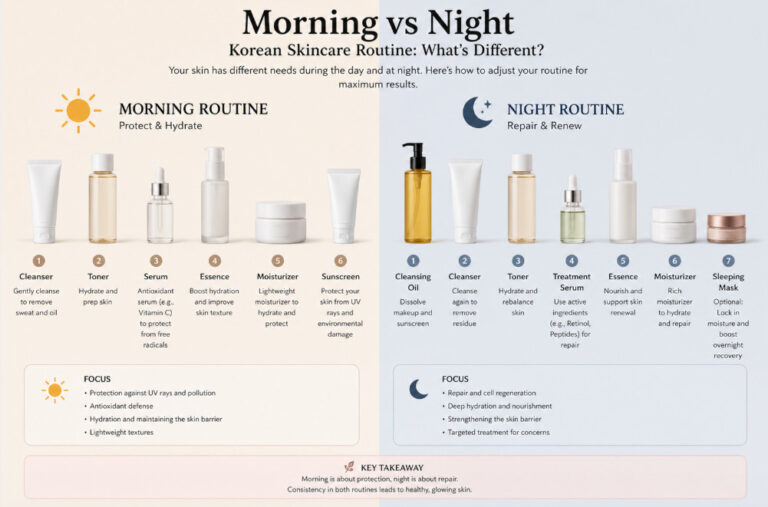
A typical Korean routine runs in a set order, and applying products out of sequence is one of the most common beginner mistakes.
| Step | Product | Why it goes here |
|---|---|---|
| 1 | Cleanser | Removes makeup, sunscreen, and the day’s buildup |
| 2 | Korean toner | Rehydrates and preps skin to absorb what follows |
| 3 | Essence (optional) | Adds a lighter layer of hydration and actives |
| 4 | Serum | Targets specific concerns like brightening or redness |
| 5 | Moisturizer | Seals in the layers underneath |
| 6 | Sunscreen (AM only) | Protects skin, especially after any acid toner |
Some people in the K-beauty community use a 7-skin technique, patting on the same Korean toner in thin layers instead of one thick coat. It’s a popular habit, not a dermatological requirement, so there’s no need to force it if one layer feels like enough.
Where Can I Buy Korean Toner in 2026?
Olive Young is still the biggest single source for Korean toner, both in Seoul stores and through international shipping.
Shoppers visiting in person tend to head for the Olive Young flagship in Myeongdong, which carries the widest shelf of brands tourists specifically ask for. For a wider view of how Korean beauty brands reached shelves far beyond Seoul, see our breakdown of how K-beauty and fashion took over the US.
| Where | Good for | Know before you go |
|---|---|---|
| Olive Young, Myeongdong | Testing bottles in person | Bring your passport for the tourist tax refund on qualifying purchases |
| Olive Young Global Mall (online) | Buying without visiting Korea | Ships internationally; prices shown in your local currency |
| Incheon Airport duty-free | Last-minute buys before flying home | Selection is smaller than in-city stores |
| Overseas retailers (Soko Glam, YesStyle, Amazon) | Fastest delivery outside Korea | Prices usually run higher than buying in Korea |
Most mass-market Korean toner bottles at Olive Young run roughly ₩10,000 to ₩25,000 (about $7 to $18), though prices and promotions shift often, so check the Olive Young app for the current price before you buy.
Frequently Asked Questions About Korean Toner
Is a Korean toner the same as a Western toner?
Not usually, most Korean toner formulas are hydrating and alcohol-free, meant to prep skin for serum, while many Western toners are astringent and meant to remove residue.
Can I use an exfoliating Korean toner every day?
Start with 2 to 3 times a week if it contains AHA, BHA, or PHA, build up slowly while watching for irritation, and wear sunscreen daily.
Do I need different toners for morning and night?
Not necessarily, one well-matched toner usually covers both times, though some people save a stronger exfoliating toner for nighttime only.
What’s the cheapest way to buy Korean toner outside Korea?
Olive Young’s Global Mall often beats overseas resellers on price, but compare its shipping cost against sites like Soko Glam or Amazon before ordering.
Picking a Korean toner really comes down to three things: your skin type, the lead ingredient, and where you apply it in your routine. Got a skin type or ingredient question this guide didn’t cover? Leave it in the comments below.
Editlab, https://editlab.luvpp.com
EDITLABPublished by EditlabA media network of 8 titles with free data tools.About the network ›
Written by the Editlab editorial desk · Automated pre-publication checks (duplicates, format, house rules) · Report an error · Add this site as a preferred source on Google
오래 쓴 사람의 요령이 따로 있습니다. 겪어 본 사람에게 직접 듣는 편이 빠를 때가 있습니다. 글은 누구나 읽을 수 있고, 질문을 남기려면 카페 가입이 필요합니다.