Can this low-stress Korean skincare routine secret really calm beginner skin in 2026? If you want clear order, simple product logic, and no unnecessary fluff, this guide walks you through the modern Korean skincare routine in a way that feels realistic, gentle, and easy to follow.
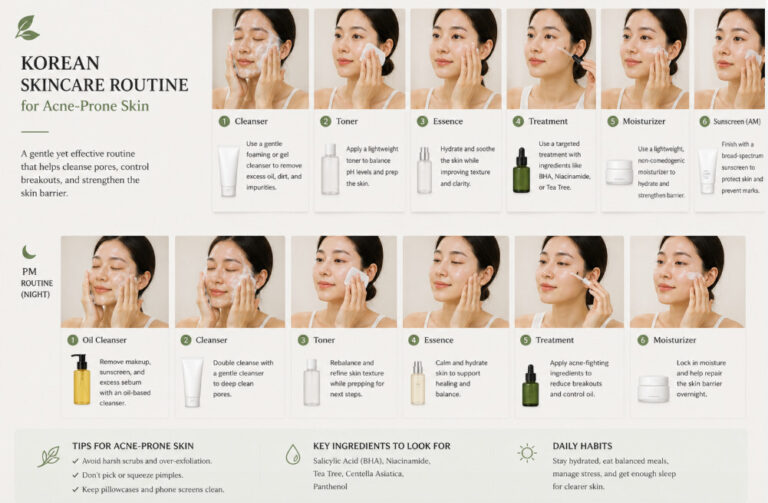
Many beginners still imagine Korean skincare as a dramatic 10-step ritual that takes longer than breakfast, laundry, and a life crisis combined. In reality, modern beginner routines are much more practical. Current guides increasingly recommend a simplified structure built around cleansing, hydration, barrier support, targeted treatment, and daily sunscreen rather than doing every classic step every day.
This shift happened for a good reason. Skin does not become healthier because a shelf gets crowded. It becomes healthier when you protect the barrier, avoid irritation, and use products in the right order. That is why a beginner routine in 2026 is usually closer to four or five core steps than a full ten-step marathon.
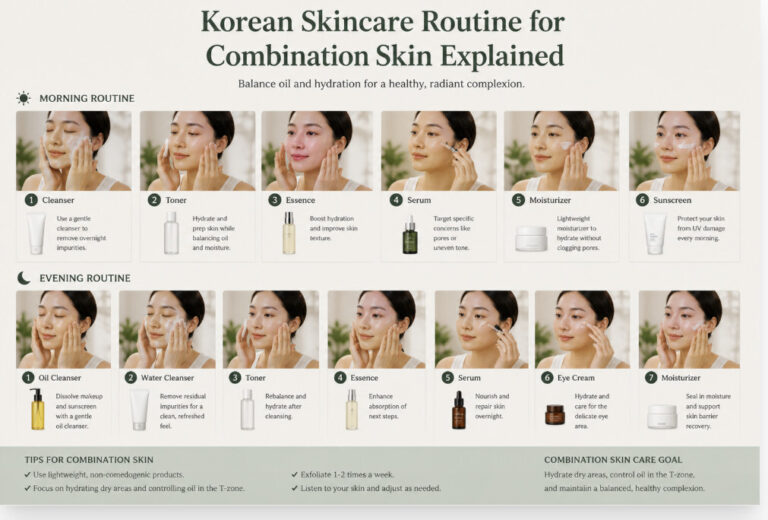
If you are completely new, think of your routine like getting dressed for the weather. First, you clean the skin. Then you give it water, then comfort, then protection. At night, you remove sunscreen and buildup more carefully. In the morning, you focus on keeping skin calm and protected.
Morning
- Gentle cleanse or rinse
- Hydrating toner
- Essence or serum
- Moisturizer
- Sunscreen
Night
- Oil cleanse if you wore SPF or makeup
- Water-based cleanser
- Toner
- Serum or essence
- Moisturizer
1. Gentle cleanse or a light rinse
Not every beginner needs a strong morning cleanse. If your skin feels normal when you wake up, a splash of lukewarm water can be enough. If you feel oily or sweaty, use a low-foaming gentle cleanser. The goal is to freshen the skin, not strip it until it feels squeaky. Squeaky skin sounds clean, but it often means your barrier is filing a complaint.
2. Hydrating toner
Toner in Korean skincare is usually about hydration, not harsh astringent shock therapy. A beginner toner should help the skin feel comfortable and slightly damp, so the next products spread more evenly. Look for humectant-rich formulas and avoid strong acids at the start unless you already know your skin tolerates them well.
3. Essence or serum
Pick one main concern and keep it simple. If your skin feels dry, choose hydration. If it looks dull, choose brightening support. If it gets easily irritated, choose barrier-friendly soothing ingredients. One targeted product is enough in the beginning. Skin likes consistency more than chaos wearing expensive packaging.
4. Moisturizer
Moisturizer helps reduce water loss and keeps the skin barrier feeling steady. Gel creams often suit oily or combination skin, while cream textures usually feel better for dry skin. The right moisturizer should make your face feel comfortable, not sticky, greasy, or like it is auditioning for a frying pan commercial.
5. Sunscreen
This is the step beginners should treat as non-negotiable. Sunscreen protects against daily UV exposure, and many Korean routines place heavy emphasis on prevention, not just repair. Use broad-spectrum SPF every morning, even when the rest of your routine is very simple.
1. Oil cleanse
If you wore sunscreen or makeup, an oil cleanser helps dissolve those oil-based layers more effectively than a regular face wash alone. This is the first half of double cleansing, one of the most recognized parts of Korean skincare. Used correctly, it should feel smooth and comfortable rather than heavy.
2. Water-based cleanser
After the oil cleanser, use a gentle water-based cleanser to remove leftover residue, sweat, and surface impurities. This second cleanse should leave skin clean but still soft. If your face feels tight after washing, the cleanser may be too harsh or you may be cleansing longer than necessary.
3. Toner and treatment
At night, toner helps restore comfort after cleansing, and a serum or essence can focus on one concern. Beginners often do best with calming, hydrating, or barrier-supporting formulas before exploring stronger active ingredients. Your skin does not need a chemistry exam every night.
4. Moisturizer
Finish the night routine with a moisturizer that seals in hydration. If your skin is very dry, you can use a richer cream in the evening than you use in the morning. Nighttime is often where skin finally exhales, so comfort matters.
Classic Korean skincare often includes exfoliators, sheet masks, eye creams, sleeping packs, and ampoules. These can be helpful, but beginners should not rush to collect them all at once like rare trading cards. Add extras only after your core routine feels stable for at least two to three weeks.
| Optional step | What it does | How often | Beginner note |
|---|---|---|---|
| Exfoliator | Removes dead skin buildup | 1 to 2 times weekly | Start slowly and avoid daily use |
| Sheet mask | Adds temporary hydration and comfort | 1 to 3 times weekly | Nice extra, not a requirement |
| Sleeping mask | Seals in moisture overnight | 1 to 3 times weekly | Useful for dry or dehydrated skin |
| Eye cream | Adds moisture around the eye area | As needed | Often optional if moisturizer works well |
Dry skin
Look for creamy cleansers, hydrating toner layers, richer moisturizers, and extra barrier support. Avoid over-cleansing and be careful with frequent exfoliation.
Oily skin
Choose lightweight hydration, gel moisturizers, and non-heavy sunscreen textures. Oily skin still needs moisture. Skipping moisturizer can sometimes make balance harder.
Combination skin
Use light layers overall and adjust texture by area if needed. A flexible routine often works better than trying to force one heavy product across the whole face.
Sensitive skin
Keep the routine short, patch test new products, and avoid stacking multiple strong actives. Fragrance-free or low-irritation options are often the safest place to begin.
- Using too many new products in the same week, which makes irritation harder to identify.
- Choosing strong active ingredients before building a basic routine.
- Skipping sunscreen while expecting brightening or anti-aging products to do all the work.
- Confusing dehydration with oiliness and stripping the skin too aggressively.
- Changing products too quickly before giving the skin time to adjust.
- Following trends that look dramatic online but do not match your skin’s needs.
Cleanser
Beginners usually do best with a gentle, low-stripping cleanser. If you wear sunscreen daily, add an oil cleanser at night. If not, a single gentle cleanse may be enough on some evenings.
Toner
Choose a hydrating toner first. This is often easier and safer than starting with an exfoliating toner. Words like soothing, hydrating, balancing, or barrier-supporting are more beginner-friendly than intense, resurfacing, or peeling.
Essence or serum
Pick one purpose only: hydration, soothing, brightening support, or blemish care. One focused formula is easier to understand than layering three products and wondering which one caused the tiny rebellion on your forehead.
Moisturizer
Match texture to comfort. Dry skin often likes cream. Oily skin often likes gel cream or light lotion. Sensitive skin often prefers simple formulas without too many extras.
Sunscreen
Look for a sunscreen you will actually use every day. Elegant texture matters because consistency matters. The best sunscreen in the world is still useless if it lives untouched on a bathroom shelf like a decorative museum piece.
| Week | Morning | Night | Goal |
|---|---|---|---|
| Week 1 | Cleanse, moisturizer, sunscreen | Cleanse, moisturizer | Build comfort and observe skin |
| Week 2 | Add hydrating toner | Add toner after cleansing | Improve hydration rhythm |
| Week 3 | Add one essence or serum | Continue one treatment | Target one skin concern |
| Week 4 | Keep routine steady | Add optional extra only if needed | Strengthen consistency, avoid overload |
This schedule helps beginners learn what their skin actually likes. It also reduces the classic mistake of introducing six products in three days and then staring at the mirror like the skin has betrayed the friendship.
The best Korean skincare routine for absolute beginners is not the longest one, the most expensive one, or the trendiest one. It is the one you can repeat with ease. Keep the order simple, choose gentle formulas, and let your skin settle before adding more.
When a routine feels calm, clear, and realistic, people stick with it. That is where results usually begin. Not in a dramatic overnight miracle, but in the quiet rhythm of small daily care that your skin can trust.