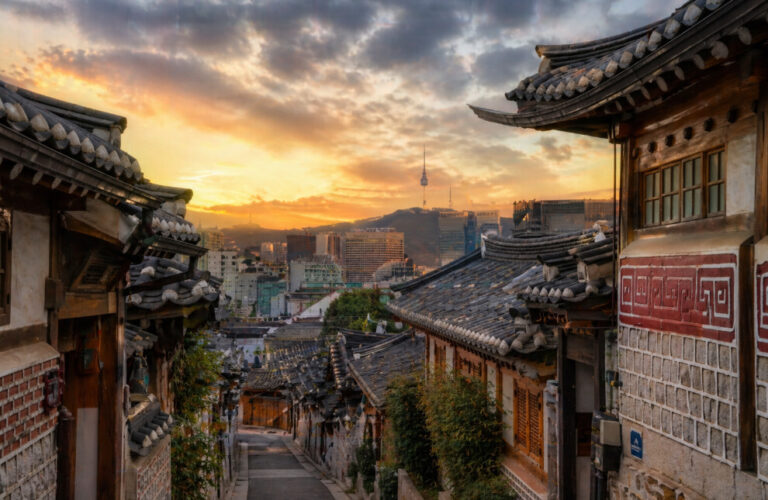
Scrolling through photos of pink cherry blossoms in Seoul or fiery red maples at Naejangsan and wondering when to actually book the flight?
I have tracked Korea’s weather and festival calendars for first-time visitors flying into Incheon, and the short version is that spring (March to May) and fall (September to November) beat summer’s monsoon rain and winter’s dry cold almost every year.
This guide is built for someone who has never been to Korea before, so it covers more than just the best travel season. It walks through how to get from the airport into the city, which transit card to buy, and whether a K-ETA is still needed in 2026.
Three numbers worth remembering before you read on: the 2026 fall foliage window around Seoraksan, the 43-minute nonstop airport train ride into Seoul, and the 90-day visa-free stay most exempt nationalities get.
What Is Korea’s Best Travel Season?
Korea’s best travel season is spring (March to May) or fall (September to November), when temperatures stay mild and rainfall is lowest.
Both seasons sit between Korea’s two weather extremes: a hot, humid monsoon in summer and a dry, often sub-zero winter. That window matters most for walking-heavy days at palaces, markets, and hiking trails, which is how most first-time visitors spend their time.
| Season | Months | Seoul Temp | Rainfall | Highlight |
|---|---|---|---|---|
| Spring | Mar-May | 5-23°C | Low-moderate | Cherry blossoms, azaleas |
| Summer | Jun-Aug | 22-30°C | High (monsoon) | Beaches, night festivals |
| Fall | Sep-Nov | 8-23°C | Low | Foliage, clear skies |
| Winter | Dec-Feb | -6-3°C | Low (snow) | Skiing, ice festivals |
If you only get one shot at visiting, aim for late September through early November. It’s the most predictable travel season for clear skies, comfortable walking weather, and the least chance of a typhoon disrupting flights.
When Do Cherry Blossoms Bloom in Korea?
Cherry blossoms usually open in Seoul in the first half of April, while Jeju and the south coast bloom up to two weeks earlier.
In a typical recent year, Jeju and Busan see blossoms from late March, Seoul and the central region follow in early-to-mid April, and the full bloom lasts only about a week before petals start falling.
Because the exact date shifts with how warm late March gets, treat any date you read online as an estimate rather than a guarantee.
- Where: Yeouido’s Hangang riverside park and Jinhae (near Busan) are the two most photographed spots.
- Crowds: Weekend afternoons at Yeouido get packed; weekday mornings are noticeably quieter.
- Common mistake: Booking flights months ahead based on last year’s bloom date — Korea’s official forecast usually isn’t confirmed until about three to four weeks before the season starts.
For the most current prediction before you fly, check the Korea Meteorological Administration rather than a blog post written the year before.
When Does Fall Foliage Peak in Korea in 2026?
Korea’s 2026 fall foliage peaks in late October in the north and Seoul, and in early-to-mid November across the southern regions.
According to the Korea Forest Service’s 2026 foliage outlook, reported in the Korean press in early October, this year’s colors arrived later than usual because of a warm September and October.
Seoraksan, the earliest major marker, was forecast to peak around October 20 to 25, 2026, with Seoul and Gyeonggi following in the last days of October and the southern provinces not peaking until early-to-mid November.
| Region | 2026 Peak Window | Example Spot |
|---|---|---|
| N. Gangwon | Oct 20-25 | Seoraksan National Park |
| Seoul & Gyeonggi | Around Oct 31 | Namsan, Yumyeongsan forest |
| Gyeongsang | Around Nov 2 | Jirisan recreation forest |
| South Jeolla | Nov 10-17 | Jindo recreation forest |
Sources disagree on exact peak dates partly because some use the point where 50% of leaves have turned, while others wait for 80% canopy coverage, so treat these as a planning window, not a single day.
Should You Skip Summer or Winter in Korea?
Summer and winter aren’t off-limits, but each has one dealbreaker worth planning around: summer’s monsoon rain and winter’s sub-zero mornings.
Why summer is Korea’s trickiest travel season
The monsoon, called jangma, usually runs from mid-June to late July, with humidity regularly above 80%. Typhoon risk follows in August and September, which can delay flights and ferries to Jeju with little warning.
Why winter still has fans
Seoul’s January mornings average around -6°C, but the air is dry and palaces are far less crowded than in spring or fall. If skiing is the actual goal, resorts like Yongpyong draw visitors from across the region, and it’s worth comparing options in our Korea vs Japan ski resort comparison before booking lift tickets.
How Do You Get Around Korea as a First-Time Visitor?
Most first-time visitors land at Incheon Airport, ride the AREX train about 43 minutes to Seoul Station, then switch to a T-money card for subways and buses.
No matter which travel season you pick, the logistics of day one stay the same. Here’s what actually gets used by most travelers once they land.
| Transport | Time | Approx. Cost | How to Book |
|---|---|---|---|
| AREX nonstop train | 43 min | ~11,000 KRW | Kiosk or airport counter |
| Airport limousine bus | 60-90 min | ~17,000 KRW | Pay onboard or online |
| T-money transit card | n/a | ~4,000 KRW + top-up | Convenience stores, airport |
| KTX Seoul-Busan | ~2h30m | Varies by class | Korail app or travel agent |
Major palaces like Gyeongbokgung typically open from 9 a.m. to 6 p.m., with longer summer hours, and most close one weekday, commonly Tuesday — always confirm on the official site before you go, since hours shift seasonally.
For multi-day trips outside Seoul, our Korea tours booking guide breaks down how to reserve seats and tours in English.
Do You Need a Visa or K-ETA to Visit Korea in 2026?
Many nationalities can skip the K-ETA through the end of 2026, but nearly everyone must still submit the separate e-Arrival Card before landing.
Whichever travel season you choose, the entry rules for 2026 matter just as much as the weather.
As of October 2026, Korea’s K-ETA exemption for visa-waiver nationalities, including the United States, United Kingdom, and EU member states, runs through December 31, 2026, and visa-free stays typically run up to 90 days depending on nationality.
A new e-Arrival Card has been mandatory for most entrants since January 1, 2026, filed online before you fly or on arrival.
- Check first: confirm your passport’s current exemption status on the official K-ETA portal rather than an older travel blog, since the exempt list has changed more than once in 2026.
- File the e-Arrival Card: this is separate from K-ETA and applies even if your country is K-ETA exempt.
- Final call: an immigration officer at Incheon or Gimpo still makes the final entry decision, regardless of what your K-ETA or e-Arrival status shows.
That’s the full picture of Korea’s best travel season for 2026: lean toward spring or fall for the weather, but build your itinerary around the actual foliage and bloom dates rather than a fixed date on a calendar, and sort out your K-ETA or e-Arrival status weeks before you fly, not the night before.
Frequently Asked Questions
What is the single best month to visit Korea?
Most travelers rate late October the single best month, since fall foliage is typically near its peak in Seoul and the north around October 25 to 31 and typhoon risk has usually passed by then.
Is spring or fall better for a first-time visitor?
Fall is generally easier for first-timers because its weather window is more stable, while spring’s exact cherry blossom date can shift by a week or more depending on how warm late March turns out to be.
Do I need a K-ETA to enter Korea in 2026?
It depends on your passport. Many nationalities remain exempt through December 31, 2026, but you should still check the official K-ETA portal and complete the separate e-Arrival Card now required for most entrants.
How long does it take to get from Incheon Airport to Seoul?
The AREX nonstop train takes about 43 minutes to Seoul Station, while airport limousine buses take roughly 60 to 90 minutes depending on traffic.
Editlab, https://editlab.luvpp.com
EDITLABPublished by EditlabA media network of 8 titles with free data tools.About the network ›
Written by the Editlab editorial desk · Automated pre-publication checks (duplicates, format, house rules) · Report an error · Add this site as a preferred source on Google
검색해도 내 집 사정과는 다를 때가 있습니다. 먼저 겪은 분들이 알려주는 자리가 있습니다. 글은 누구나 읽을 수 있고, 질문을 남기려면 카페 가입이 필요합니다.